
A lot of my branding focuses on my relationship with surfing, but if you dig deep you will also see my love for baseball. While I think I did well explaining the Steep & Deep Approach through surf language, I know baseball is more popular. So I am going to use that to explain the creative analysis portion because…
- It is the best sport in the world.
- It loves analytics.
- The Giants are a great team.
If you disagree with 1 or 3, schedule a coffee chat for a debate that you will love losing.
But for now…let’s focus on the parallels between marketing and baseball.
The key parallel between the two is the importance of data and the ways it can be utilized to optimize performance. Data has always been a key part of strategy and measuring success for both. And for both marketing and baseball, data analysis has been fast evolving and expanding its measurements and importance in the industries.
Whether it is the players or the creators, the brand manager or the team manager, the CMO or the President of Baseball Ops, data is a part of their every day existence. It feeds their strategy. It feeds their development. It proves their success.
Even if you aren’t a baseball nerd, you’ve heard of the impact of analytics in baseball be it from the movie Moneyball or from the Google Statcast replays during any and all games.
The goal is the same between marketing and baseball – efficient success. The belief is the same too – if you use the right metrics and set measurable growth goals, you can efficiently develop top-level baseball players or content and create a successful roster or strategy. The key part – efficiency
But, unlike marketing, baseball still has vocal rebels of an analytics-first strategy. There are still a decent amount of the old-school minds who have achieved success even the naked eye can measure. Their ability to create that success came from their unique ability to combine their leadership ability and baseball intelligence with the present data to correctly develop team and roster strategy, make real-time decisions, and provide a growth process.
They don’t believe the only things that help predict the future are the qualitative numbers and current performance trends, they believe that matters but the ability to read the technique, see the mind, and provide specific support matter equally.
The teams that have relied solely on data, mainly as a way to keep tight budgets, have made it to the postseason, but haven’t won the World Series. The ones that won, well they won just like great marketers.
They did one of two things:
- Mixed that analysis with a second sense and drove good teams to greatness.
- They had a budget to sign anyone and everyone great, and did.
In marketing terms:
- They took a good strategy and team, blended it with critical data and experience to make it great.
- They had the budget to buy ad space on every channel while creating A/B test trials as well.
What I am saying here is that data is very important. But, what is more important is how much weight you give the data and blending in experience. It is very important to not live and die by the numbers, be they current or past. Science and art together is a winning formula.
There’s a baseball IQ and there’s a marketing IQ. It’s both natural and nurtured by experience. It provides a unique sense of ability to stay ahead of competition. It’s something only measurable over time and by the naked eye.
It’s also something that needs data to reach a high-level success and to create the correct leadership perspective. Most marketers can give you the basic channel needs and identify KPIs. But what separates the best, is an ability to find the next level of success by mixing the key KPIs with the specific, often lesser valued, metrics and that marketing IQ.
Let’s paint the picture of this parallel between my profession and my passion. And let’s keep this as simple as possible and utilize the metrics for performance of current Awareness, Consideration, Conversion, and Loyalty campaigns, as well as organic social media.
Further, we are pretending the marketing strategy and goals created content that is the roster. The campaigns and content are all complete, just like the baseball season. Right now is the time we soak in eager to dive deeper into the successes and failures. It’s the opportunity to take the big picture perspective after months of bi-weekly check-ins.
How do we truly analyze not just campaign success, but asset success? It’s the same as how we analyze a player’s contribution to a baseball team.
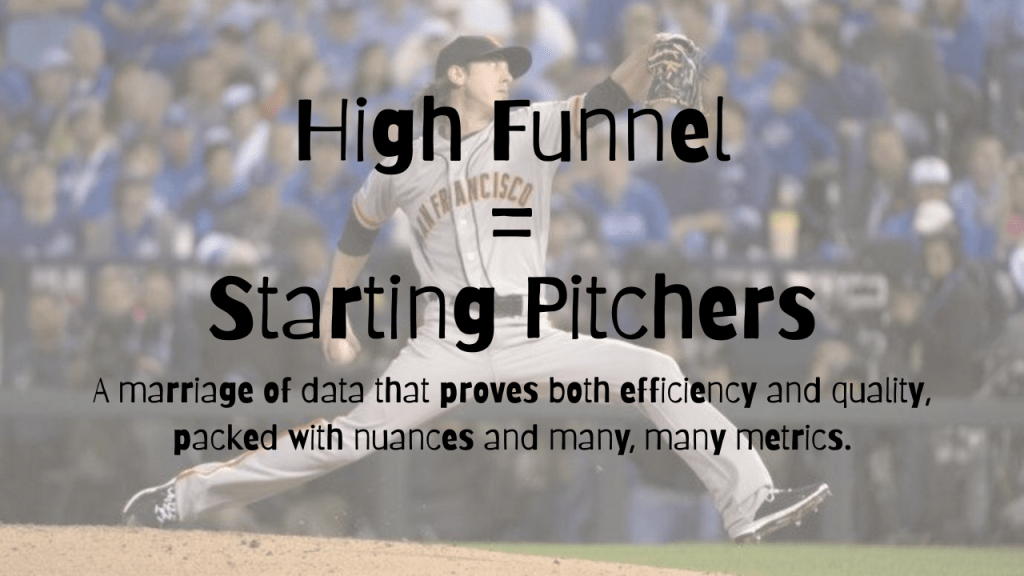
First up: a review of Awareness campaign assets with my favorite starting pitcher, Big Time Timmy Jim. I parallel Awareness and Consideration to starting pictures because these high funnel tactics create the opportunities for eventual conversions. The less runs you give up, the more chances to take the lead. High level marketing and starting pictures lay the groundwork to the win, but they don’t do it all.
That said, they are the easiest to adapt and evaluate. So, let’s go!
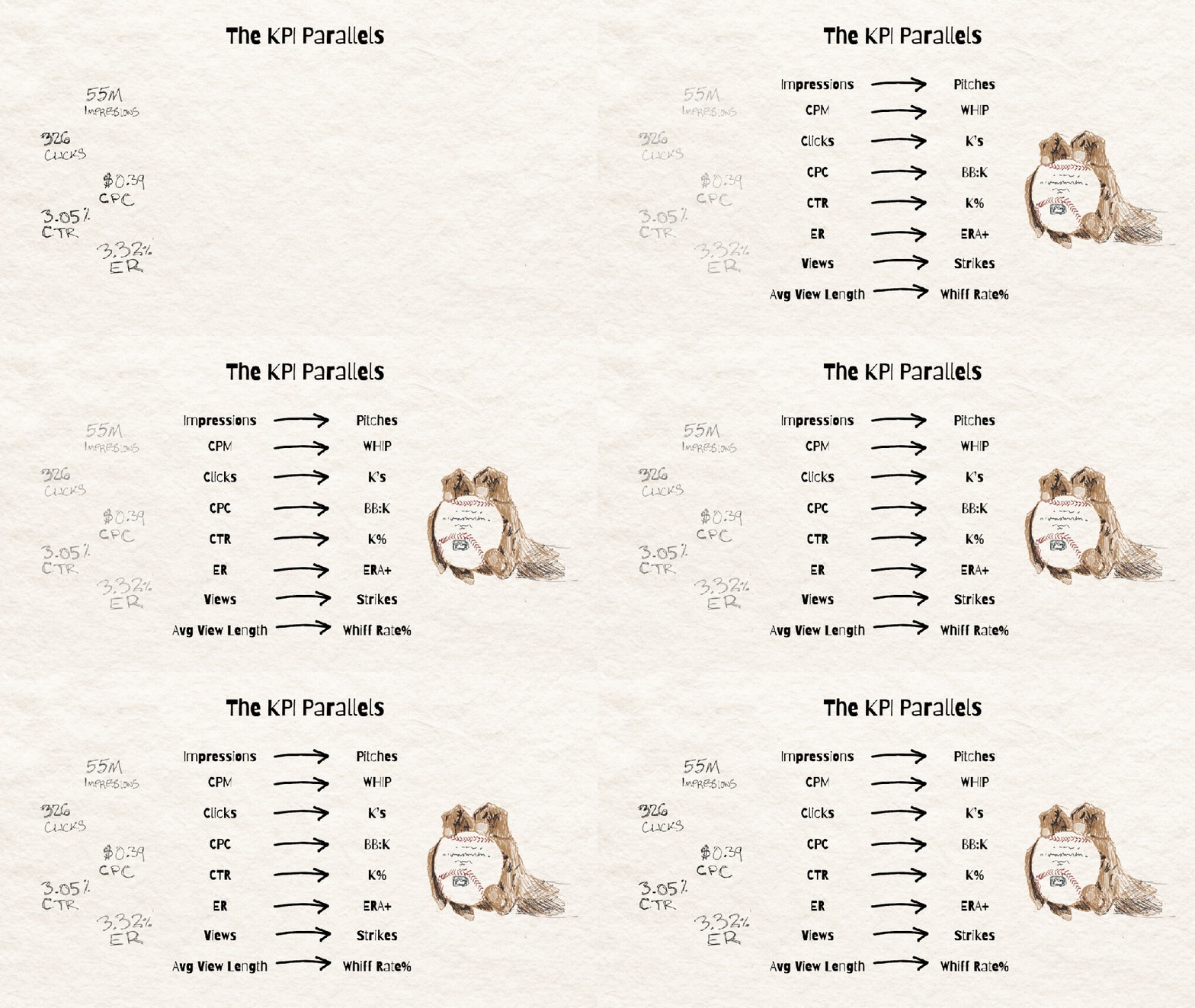
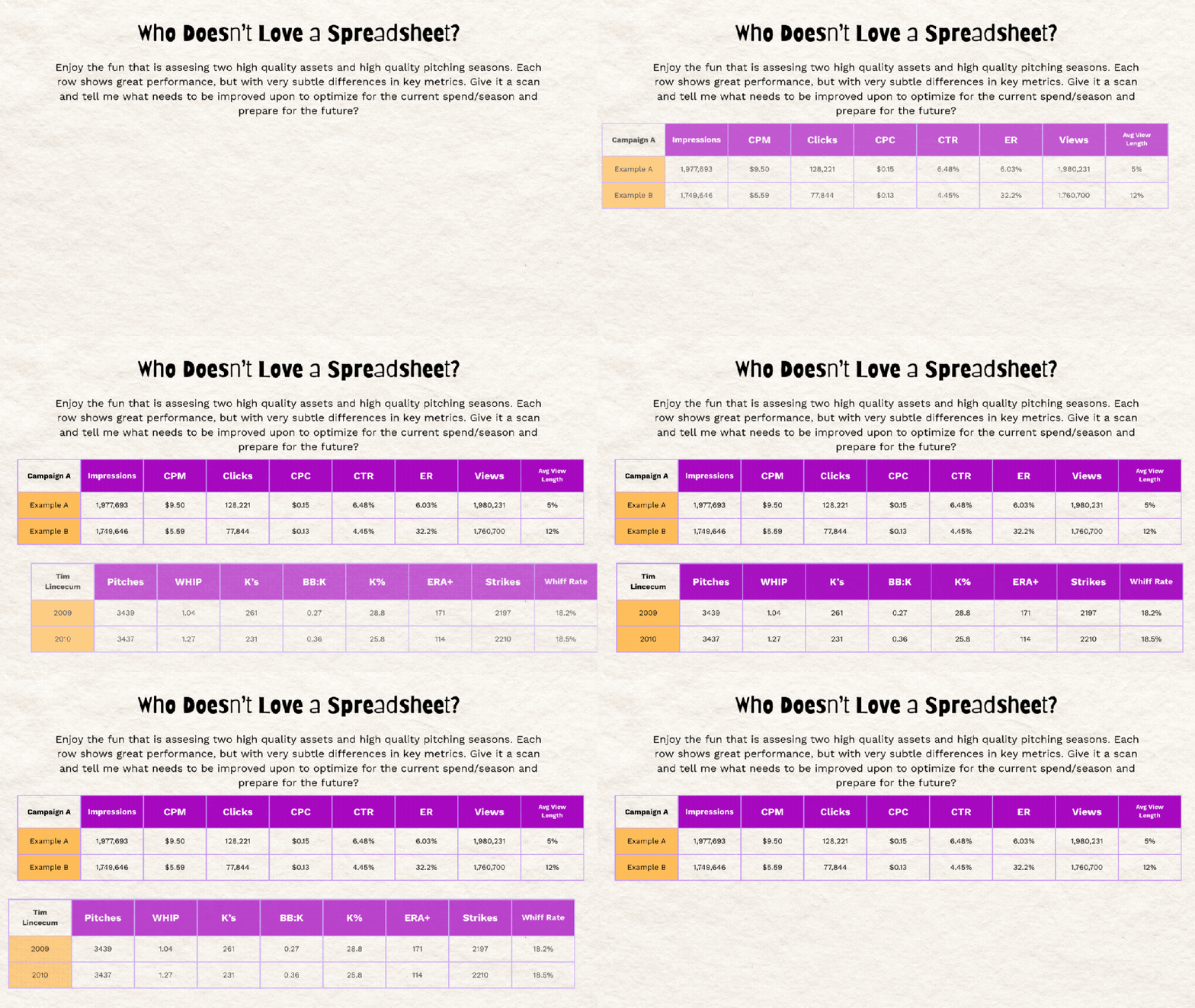
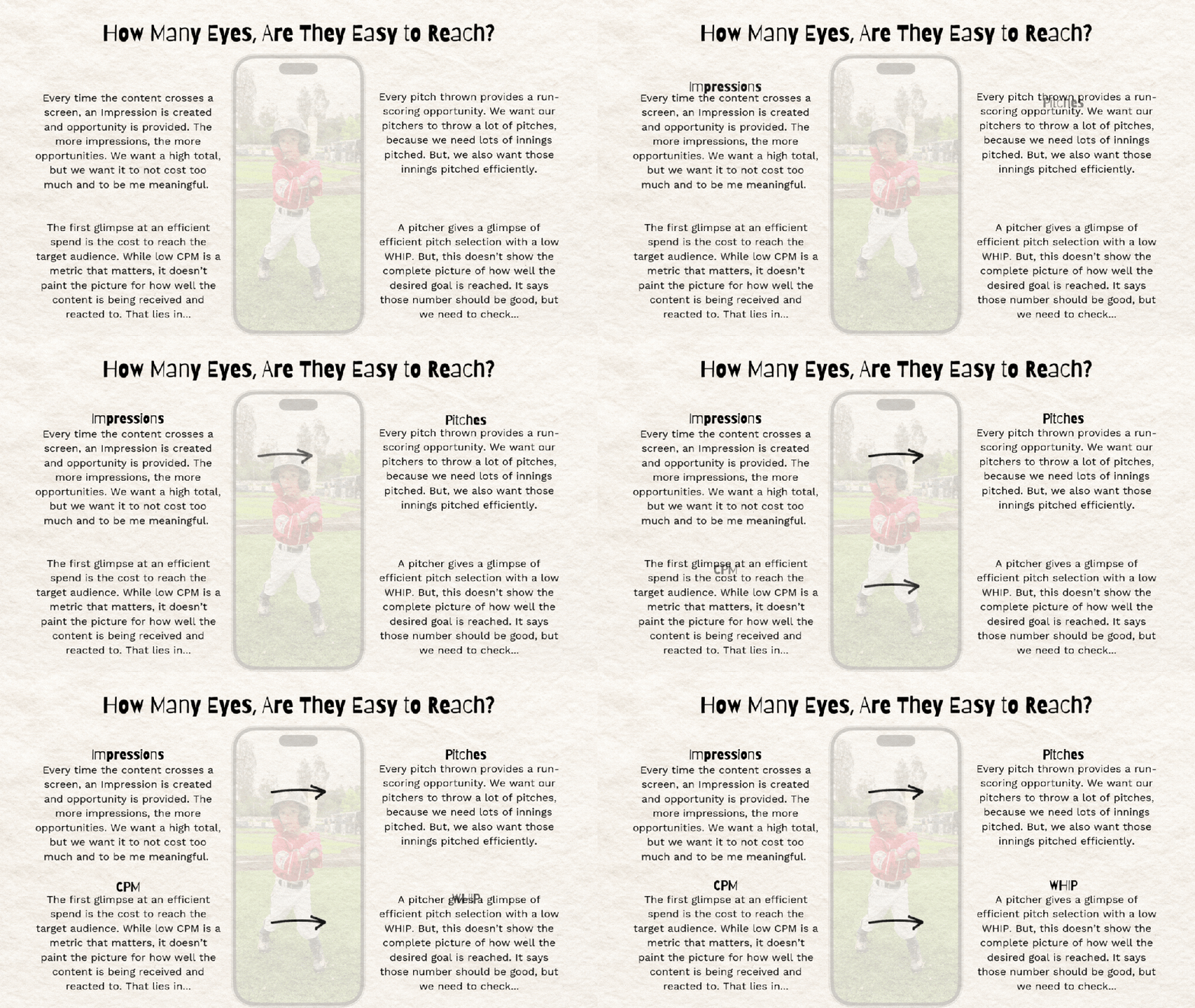
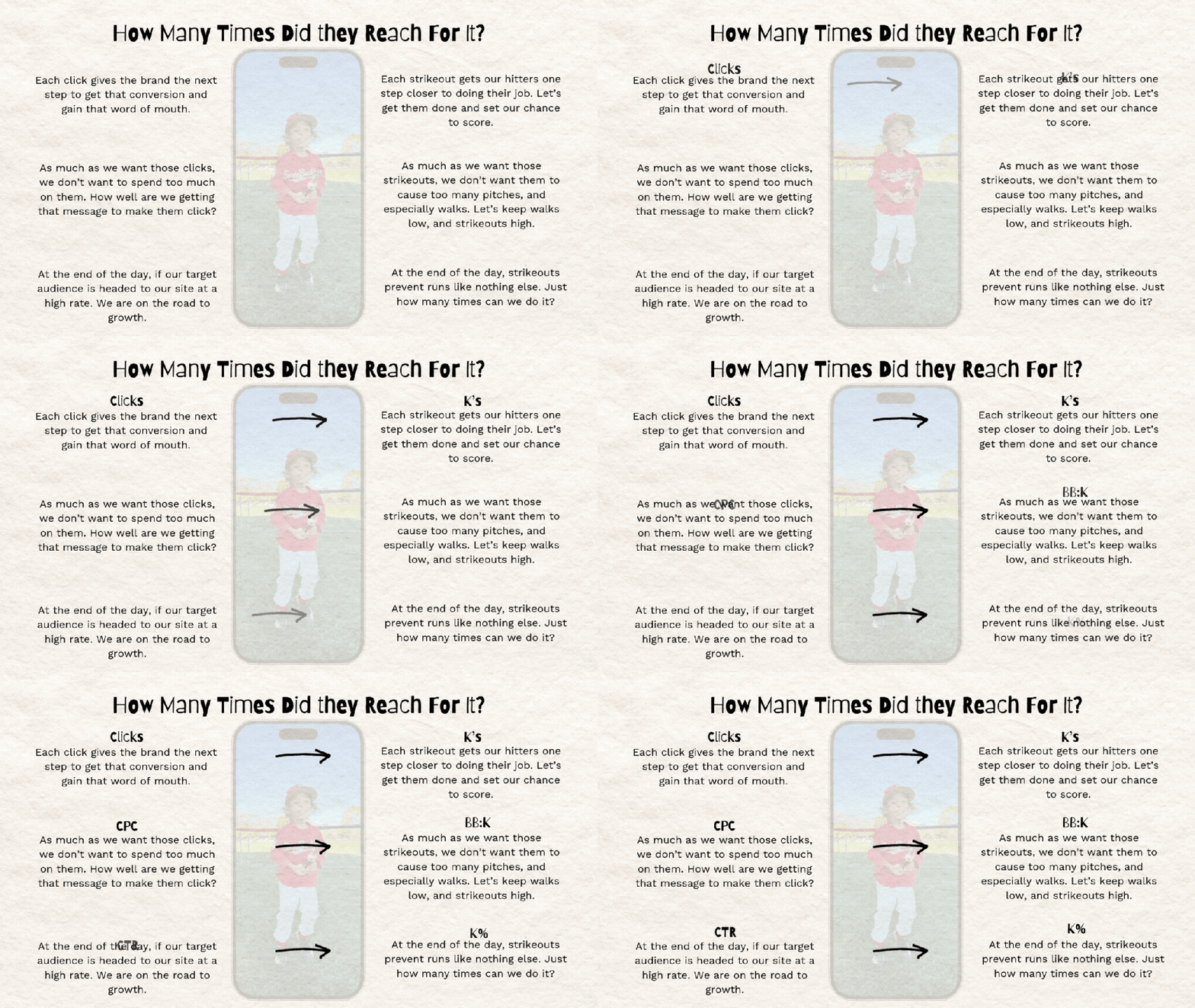
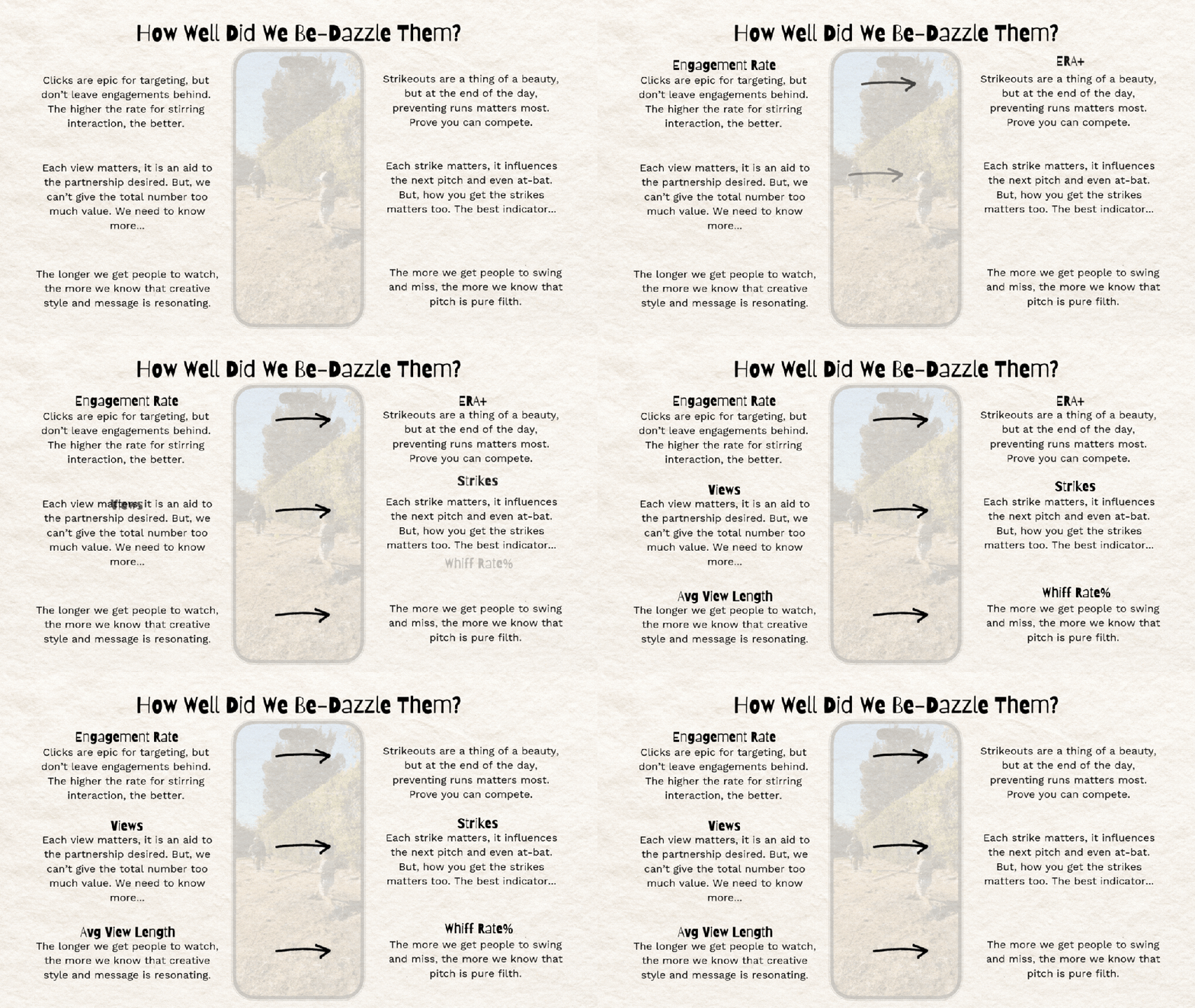
All told – in marketing and baseball – you want high totals and good rates to generate those totals. Sometimes that rate is low, sometimes it is high. And above all – no single metric tells the whole picture, it just helps provide some feedback.
Stay tuned for next week as we review the next part of high-level marketing and a pitching staff – organic social media’s parallel with the bullpen staff. This will be especially fun as we will look both at the standard performance metrics and the splits that drive development and make stat nerds stoked.
After that we will close with analyzing Conversion and Loyalty campaign assets the same way baseball teams analyze their hitters. This is because creating a conversion via an ad is not easy, just like hitting a baseball is the hardest thing to do in sports. To win in business, you need revenue – even if you have high awareness. To win in baseball, you need runs – even if your pitcher is doing well.
 Keep it stoked
Leave a comment